Turning uncertainty at the station into a product opportunity
Finding a journey online was relatively easy. Finding the correct vehicle at a crowded station was not.
Passengers could arrive surrounded by several similar-looking vehicles, all carrying the same company branding but travelling to different destinations. Information on a ticket or phone did not always help someone connect their digital booking with the vehicle physically in front of them.
The mobility company was familiar with the problem. What it lacked was a sufficiently clear direction for solving it.
Starting with the passenger, not the technology
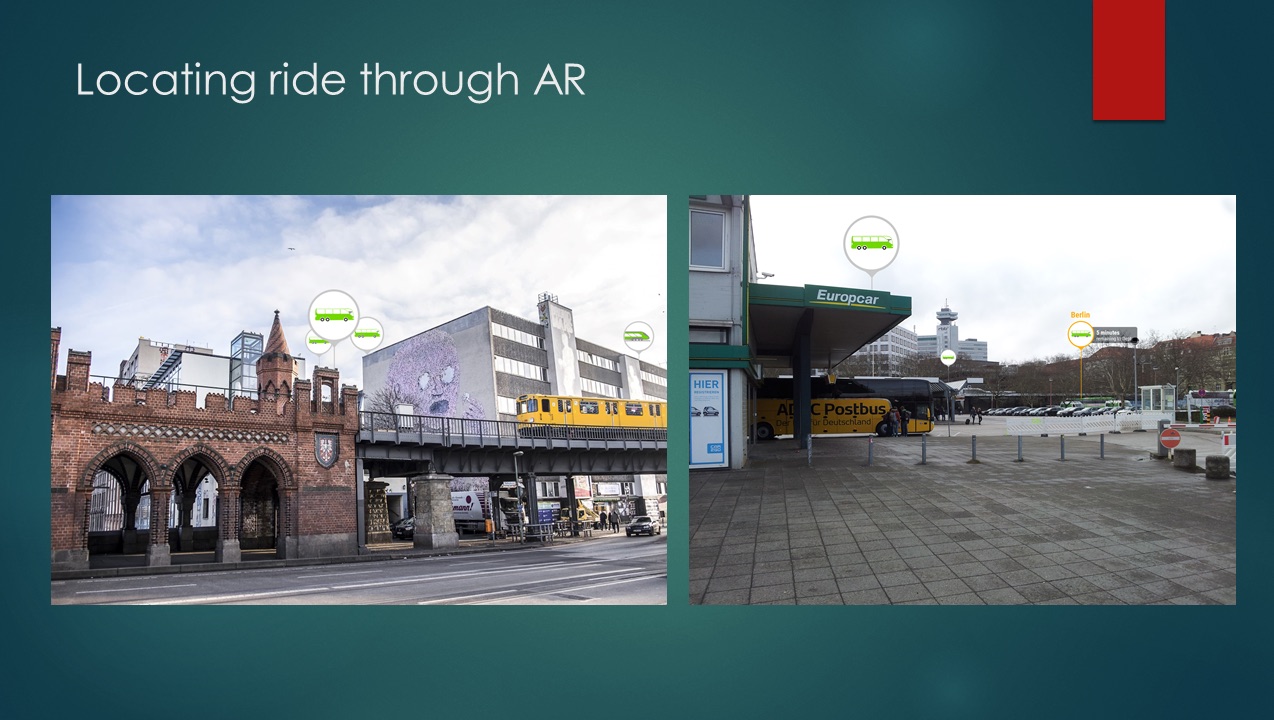
Augmented reality offered an interesting possibility: passengers could use their phone’s camera to view journey information within the station and identify the correct departure more easily.
But an unfamiliar technology was not, by itself, a reason to create a product.
We began by defining the situation in which it could provide genuine value. The concept focused on the moments when passengers felt most uncertain: arriving at the station, locating the correct vehicle, and confirming that they were in the right place.
We then developed the idea into a tangible product concept. It demonstrated how passengers might locate their vehicle, receive relevant information, and access useful content through the company’s existing mobile service or a separate experience.
Making the opportunity easier to evaluate
Before the concept existed, the company had a known customer problem but no shared picture of what a response could look like.
Making the idea visible changed the conversation. Business and brand stakeholders could consider its customer and commercial value instead of discussing technology in the abstract. Technical teams could begin asking practical questions about data, integration, and implementation.
We helped the company examine whether passengers would find the experience useful, whether it strengthened the wider service, and whether the existing technology could support it.
What we changed
We transformed a familiar but loosely defined passenger frustration into a product direction the organization could act on.
The concept generated more than general enthusiasm. A business team was assigned to investigate its commercial potential, while a technical team began assessing whether it should become part of the existing application or a separate experience.
The client moved from recognising a problem to actively investigating a defined solution.
From an interesting idea to an informed decision
The client needed to know whether the idea addressed a meaningful customer problem and whether it deserved further investment. Our work:
- Defined the passenger problem and the precise moment where support was needed
- Turned an emerging technology into an understandable service concept
- Connected customer value with business and technical considerations
- Gave different teams a shared basis for evaluating the opportunity
- Clarified what needed to be investigated before investing in development
Instead of committing prematurely—or allowing the opportunity to remain an abstract idea—the organization could make a more informed decision about where to take it.